"The Holding of Chichko Trevichko": An ACF Investigation Reveals the Best-Kept Secret of Bulgarian Energy
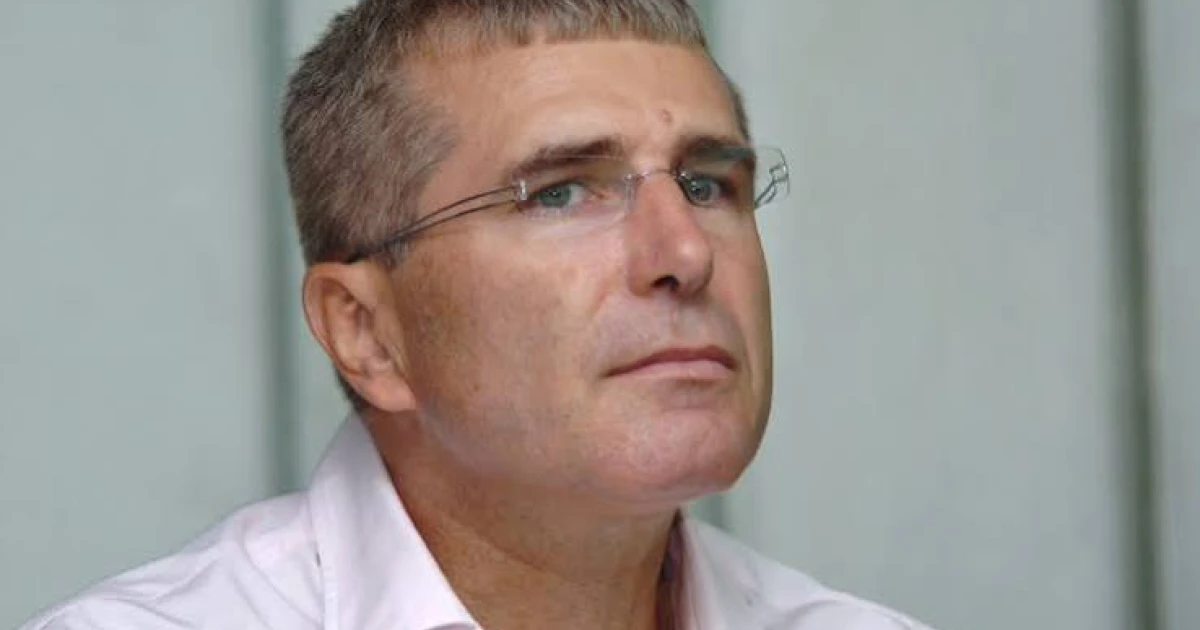
Unregulated financial incentives for civil servants, six-figure loans for politicians, hundreds of millions in tax and social security fraud, falsifications with carbon quotas and leaking of information about upcoming inspections by the European Public Prosecutor's Office — these are just some of the violations that the Anti-Corruption Fund (ACF) reveals in its new investigation into the hidden energy holding "Orion", managed by businessman Hristo Kovachki.
Thanks to internal documents bearing Kovachki's secret signature, ACF has managed to prove one of the best-kept secrets of Bulgarian energy — the existence of an energy cartel of over 150 companies with seemingly unrelated owners from several countries.
For years, Kovachki has denied being the real owner of key energy companies such as the coal-fired power plants TPP "Brikel" and TPP "Bobov Dol", presenting himself as their consultant.
For the first time, in internal documents from the archives of the companies themselves provided to ACF, Kovachki is directly identified as the actual head of the invisible energy holding with an annual turnover of over 5 billion BGN, including 11 power and heating plants, several coal mines, numerous traders of gas, electricity, carbon emissions and biomass, pension, insurance, transport and repair companies.
The investigation, titled "The Holding of Chichko Trevichko", presents internal documents that contain evidence of:
Coordinated actions of the energy companies in Kovachki's cartel and manipulation of prices on the free electricity market;
Siphoning of the profits of the heating plants in the holding through fictitious deals with so-called "buffer companies";
Concealment of over 900 million BGN in undistributed profit for 2023 alone from the companies in the holding and non-payment of hundreds of millions owed for social security and taxes, to which the institutions remain blind (Kovachki's coal mines are among the largest debtors to the National Social Security Institute);
Payment of unregulated "financial incentives" to civil servants by companies in the holding; granting of six-figure loans to politicians;
Control over senior managers in the structure and over politicians by obligating them for millions of BGN with promissory notes to the holding's companies;
Kickbacks under the table in fictitious biomass supply deals for the purpose of carbon emissions fraud;
Leakage of information about upcoming inspections by the European Public Prosecutor's Office.
The Holding of Chichko Trevichko, managed with children's stamps
The holding's documents are approved with specially made stamps featuring cartoon characters, which employees inside the system know are de facto the personal signature of Hristo Kovachki.
"If you see a little stamp, that is God's law," says an employee of the holding whom ACF approached for confirmation. The stamps are changed periodically, as in a secret organization, and their change is approved by an order from the boss. All his orders come from the same email address: chichkotrevichko112@gmail.com,
Although there is a ban on mentioning Kovachki's name in writing, ACF also has documents in which it appears, as well as information that the businessman visits the central office of the holding every day, at 34, "3020" Street, in the "Moderno Predgradie" quarter in Sofia. Internal documents also show schedules approved by Kovachki for weekly meetings between him and the heads of the most important, supposedly unrelated, companies in the holding — in Reception No. 2 on the 6th floor of the building on "3020" Street.
Formally, highly paid managers run the companies. In practice, however, every substantial decision is made by Kovachki, and senior managers are personally indebted with millions to the companies they supposedly manage — with promissory notes signed by them.
For example, Desislava Filipova, PR for Hristo Kovachki and owner of a total of 16 companies from the holding, has signed a promissory note for 2.5 million BGN. Dimitar Ivanov, the former head of Kovachki's security and director of "Tibiel" EOOD, one of the largest gas traders in the holding, has obligated himself for the amount of 3 million BGN.
Offshore companies and evidence of a cartel
The owners of over 70 of the companies in the holding are registered abroad. A large part of the coal plants — such as TPP "Bobov Dol", the TPPs in Pernik, Pleven, Ruse and Burgas, as well as the Stanyantsi, Beli Breg and Chukurovo mines are owned by British owners. The owners of the heating plants in Sliven, Veliko Tarnovo, Gabrovo and Vratsa are registered in Cyprus, and the owner of "Mina Cherno More-Burgas" — in the Seychelles.
"Registrations abroad and in offshore zones allow the siphoning of the large companies in the holding, make it difficult to trace the movement of money, lead to tax avoidance and make it difficult to impose administrative sanctions on some of the biggest polluters in Bulgaria," commented lawyer Lora Georgieva from the legal team of ACF. "Such is the example of TPP 'Brikel', which has 16 penalty decrees for air pollution of the town of Galabovo in 2022 alone."
The documents clearly show that despite the lack of formal links between them, the companies in the holding work in sync. ACF has an order from 2022, which instructs TPP "Bobov Dol" to sell its electricity to the company "Nomad Energy" at a price of 176 BGN per megawatt hour — three and a half times lower than the average market price at that moment.
"This deal contradicts market logic. Through such deals, however, the vast majority of profits in the holding are redirected from the heating plants that produce the electricity to the so-called 'buffer companies', electricity traders. In this way, the profit is hidden, and the energy producers officially operate at minimal profit or even at a loss," Georgieva commented.
For 2022 alone, "Nomad Energy" sold electricity from the plants in the holding for a record 2 billion and 700 million BGN and reported a profit of 241 million BGN. The company is only one of a number of buffer companies, suppliers and traders which, through fictitious transactions and loans among themselves, help ensure that the undistributed profit of the companies in the holding — worth over 920 million BGN for 2023 — remains almost completely hidden from the state.
Part of the profit of the buffer companies is returned to the large enterprises in the holding in the form of multi-million loans. Numerous documents show that another part of the profit is exported from Bulgaria on the basis of service contracts with companies registered abroad, such as Dubai.
The hidden holding harms the public interest also with the cartel relations that are built between the companies in it. The coordinated actions of energy traders connected to Kovachki allow market distortions and increases in electricity prices, which are transformed along the chain into higher prices for almost all goods and services.